
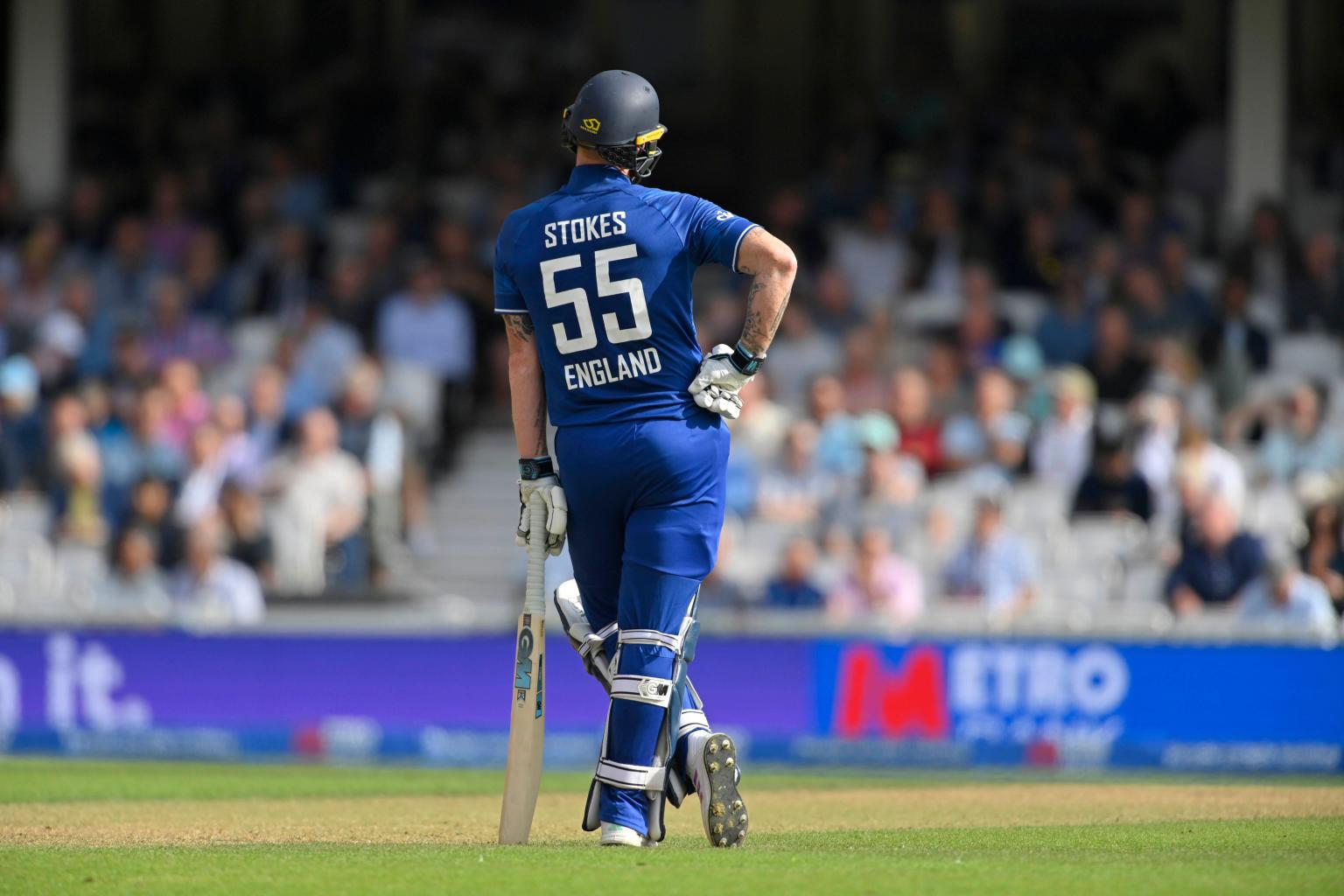
After the first three games of the 2023 ICC Cricket World Cup, defending champions England would not have expected to be fifth on the table with their prospects of qualifying for the semi finals hanging by a thread. The team seem to still be scrambling to find their groove and produce the performances that England fans are used to seeing from the ODI team, having lost a ‘should win’ game against Afghanistan that also should have seen their net run rate take a positive hit. So what is it that isn’t working for the current World Champions? Do they have the right mentality coming into their group games? And what must change if England want to save their blushes of being relegated out of the group stages?
There is no denying England were outplayed by New Zealand in the opening round of the competition, which came as a surprise as the Three Lions had just taken a competitive 3-1 series win against the Black Caps. It had been assumed this game was in the bag for England, but the run chase of 283 that was set by the defending champions was below par for the wicket. New Zealand’s wonder duo of Devon Conway and Rachin Ravindra picked apart the England’s bowling attack with ease, putting 38 boundaries on the board in 218 balls compared to England’s 27 in 300. Perhaps the loss came from an attitude error; having just competitively beat New Zealand back home, they too thought the game was already won. The attack that captain Jos Buttler had been saying the team would come into this contest with was certainly lacking, and New Zealand jumped on that to start their unbeaten streak in the group stages.
A small resurgence came for the defending squad against Bangladesh, taking the team’s first win of the World Cup. The play style looked more positive, the team looked like they might have learnt from their mistakes against New Zealand, and although the tail end of the batting line was on the weaker side and the seam attack felt a bit shaky, Dawid Malan’s 140 with the bat and Reece Topley’s 4-43 saw Bangladesh unable to catch the 365 run chase. It was the positive boost the team and fans needed, giving the impression that the World Champions just had a stumble at the start, but now they were back in this competition.
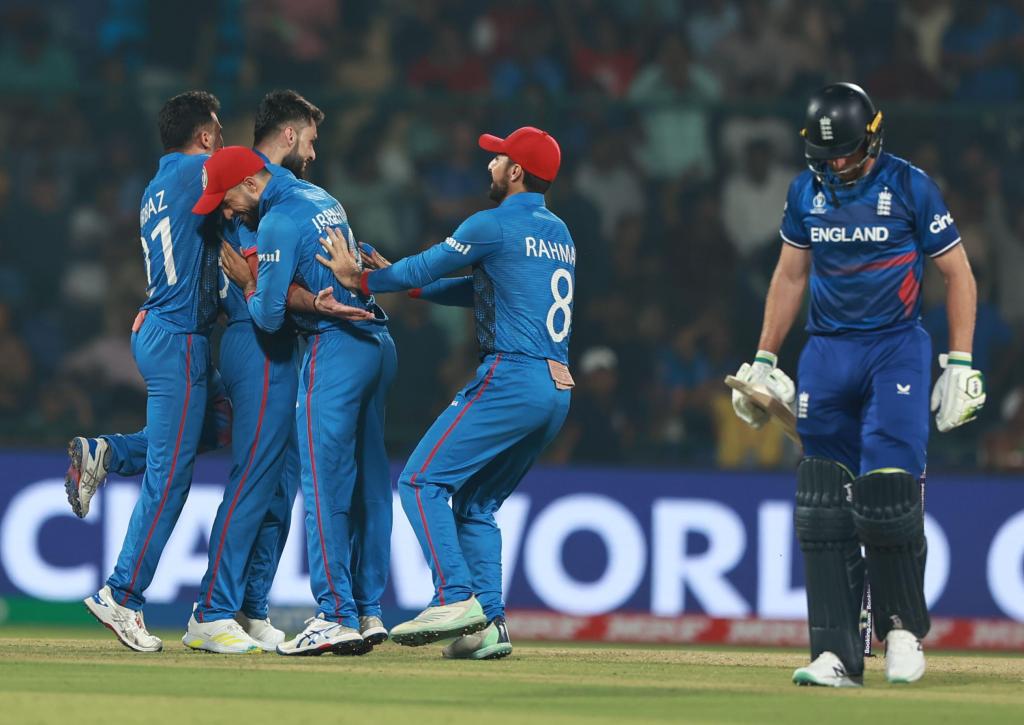
So when, coming up against Afghanistan, a team England should have batting rings around and bowled out cheaply, England found themselves faced with a 285 run chase and 68-3 after their first 12 overs, it looked like a repeat of their opening performance was about to occur. Many moments attributed to England’s surprise defeat and the question remains if choosing to field after winning the toss was one of the major factors – Buttler’s decision riding too much on a dew factor that never came. England might love the chase, but had they set a 320+ target for Afghanistan on a good-to-bat wicket, the pressure would have been on the underdogs to get the runs. With Afghanistan’s best ODI score at a World Cup 288, anything above 300 would have put the advantage in England’s hands, possibly giving them the confidence they needed to take their second win of the contest.
Instead, with two loses now to their name, they go into Saturday’s match against South Africa with their tails between their legs and a must win situation. Losing to South Africa now will mean they must win the remainder of their games for a chance of semi final qualification, and their run rate versus the competition’s run rate will become more important. One place England will not want to be in is one where they rely on other team’s performances to get them across the line.
Differing from their position in 2019, England came into this competition ranked 6th in the ICC ODI standings. Back when they won the competition four years ago, they were top. The England squad as it’s seen at the World Cup also hasn’t played a lot of ODI together for a long time, with the last ODI series England played before their contests with New Zealand and Ireland last month being in March. The Ashes Series, Test series and various franchise cricket has seen the squad obtain a lot of experience in cricket this year in all formats of the game bar ODI, and ODI comes with its own challenges that T20 and Test cricket does not present. It’s a much slower game than T20, requiring the strategic thinking of a Test match, but also with the limited overs available scores have to be put on the board quickly.
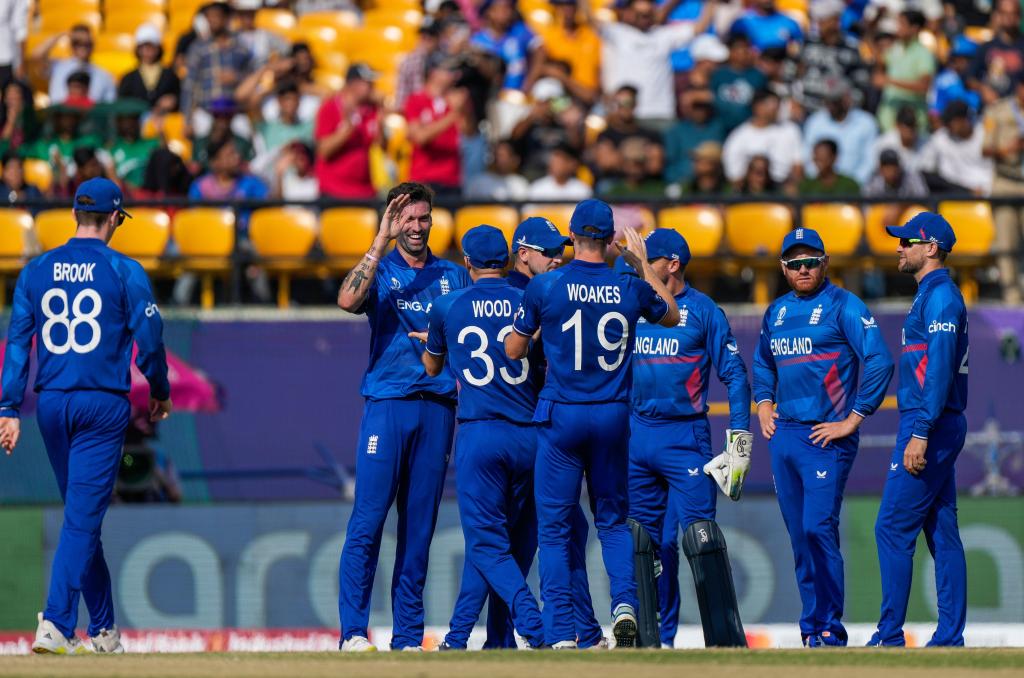
One of the weakest parts of England’s game so far has been their bowling attack, specifically their seam bowlers, with a lot of runs being leaked by Chris Woakes and Sam Curran. Whether it’s the Indian conditions or that the bowlers aren’t quite in their groove as they settle into the competition is unknown, but England – and Woakes and Curran – need to make some changes fast if they wish to remain into the semi finals. Against Afghanistan, Woakes leaked 33 runs in his first three overs, with the opposition ending their first power play 79-0, giving them the platform to almost set a new record for themselves of highest World Cup score.
The Afghanistan game wasn’t a one off, with Woakes averaging a loss of 30 runs to the opposition in his opening spells in the first three games of the contest. Across the games played, his average economy has been 7.96, only having two wickets to his name against Bangladesh. Of course, the Indian conditions suit the spin more, but if England are allowing opening partnerships to get big scores on the board early on, this will become incredibly painful as they come up against heavy batting teams like South Africa and India. Unable to afford to lose many more games, trialling David Willey in Woakes’ place for the next couple of games should not be off the table.
Woakes is a good bowler, and can be incredibly consistent with the ball, but right now he’s off form. A loyalty to waiting for him to come good could cost England their place in the semi finals, and surely it is worth trying something new to let Woakes feel more in the groove in training than risk being knocked out early.

Excluding the Afghanistan game, where credit must be given to the impressive Afghanistan spin attack, England’s top order has been pretty secure in the opening stages of the competition. The top three of Jonny Bairstow, Dawid Malan and Joe Root secured 124 of England’s 282 before losing their wickets against New Zealand, 274 of the 364 scored against Bangladesh. Although all three have had weak games and Bairstow hasn’t necessarily come to the crease batting like Jason Roy would be expected to – his best score so far 52 against Bangladesh – the trio have held strong at the top, usually getting England a good platform to build their run score.
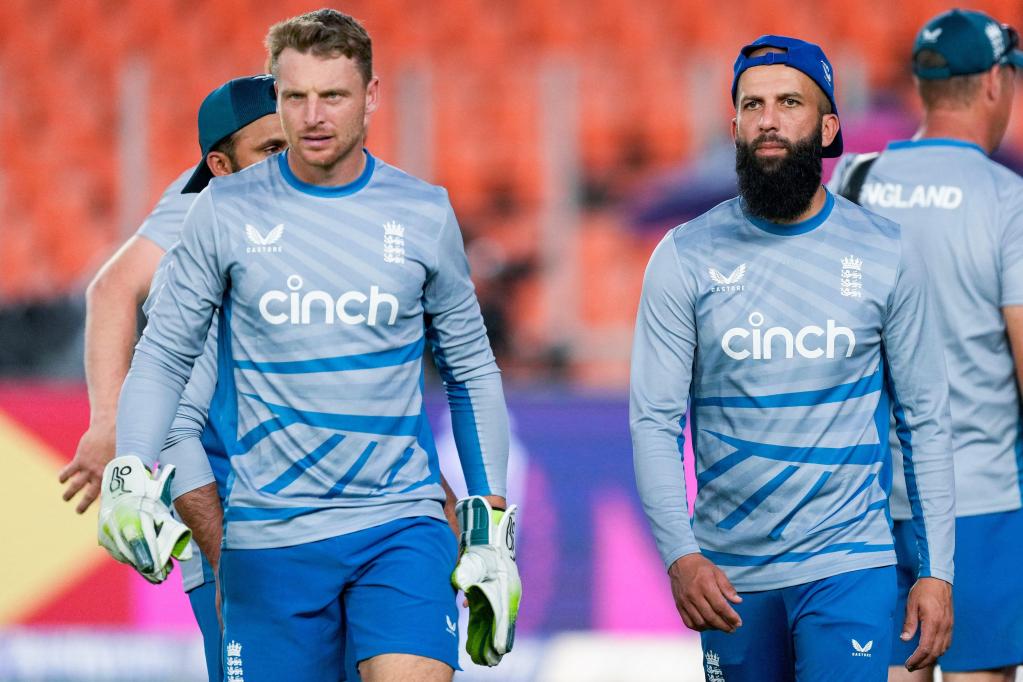
It has been the middle order that has been a noticeable weak spot for the defending champions, with heavy hitter Buttler having a competition best so far of 43 runs off 42 balls. In games where the run chase is high or a big score is needed, like in the Afghanistan game where the top order fell quickly, the middle order needs to be ready to put the charge on and change the game in a positive nature to swing the advantage back to England. The middle order of Harry Brook, Buttler, Liam Livingstone, Sam Curran and Woakes has simply not been scoring well enough and collapsing too quickly to make any positive impact, leaving it all for the tail end to do.
England’s tail end is fairly strong all things considered, with Adil Rashid and Mark Wood being key game changers as they come to the crease. But coming to the crease with over 100 left to score and only one or two wickets in hand puts a lot of pressure on those batters who’s role in the team is not to bat them out of these situations. Brook, the late replacement of Jason Roy because of his ability to be able to cover more positions on the batting order, had his moment to pull off a comeback against Afghanistan, but at no point did he look like he was moving through the gears to take the attack to the opposition’s spinners. His Test-like performance, taking 66 off 61 balls, was too slow for the ODI format, leaving too much on the table for those coming in behind him to secure the win.
What the Afghanistan game needed was a Ben Stokes performance, coming to the crease and standing strong as he broke down the run chase. Stokes’ style of play and presence at the crease has the ability to change the dynamic of the game and throw the pressure back on the opposition because they know, if they let him get into the zone, he can chase down a big score. Had Stokes come in at number four against Afghanistan and stood as long as Brook did, arguably, the game could have ended differently due to the fact he would have taken the attack to the bowlers and tried to knock them around the field. Brook played too defensively to have that impact, seeming more worried about losing his wicket than putting the runs on the board.
Whether it would have worked will always be a ‘what if’, but having a player at the crease that can do that, and the opposition know can do that, can be as powerful in a game that isn’t going your way as anyone putting on a score of 100. It’s an incoming threat that opposition captains have to prepare for and be ready to diffuse, and that changes their mentality with their field setting.
Certainly, the assumption shouldn’t be that Stokes will rejoin the squad for the South Africa game – as is expected after a hip niggle kept him out of selection for the first three games – and become the hero of the hour to change England’s entire game and get them into the semi finals. He could as easily walk to the crease and fall for five off of seven balls if the South African bowling attack gets it right as put in another 182 run score performance. But the threat of Stokes and the boost of confidence that will give the squad could be enough to get their World Cup defence on track to where it should be at this point, shift their mentality to one more of Bazball than playing the defensive game.
Round The Stumps England Start XI vs South Africa
| JONNY BAIRSTOW (OPENING BAT) |
| DAWID MALAN (OPENING BAT) |
| JOE ROOT (BAT/SPIN) |
| BEN STOKES (BAT) |
| (CPT) JOS BUTTLER (BAT/WICKET) |
| MOEEN ALI (BAT/SPIN) |
| LIAM LIVINGSTONE (BAT/SPIN) |
| ADIL RASHID (SPIN) |
| MARK WOOD (SEAM) |
| REECE TOPLEY (OPENING SEAM) |
| DAVID WILLEY (OPENING SEAM) |
With South Africa coming off of a heavy loss like England did, unable to win a ‘should win’ game against Netherland last week, they too will come into tomorrow’s game a little on the side of caution. England will need to take advantage of that, knowing that South Africa’s bowling towards the end of Netherland’s batting innings was unable to keep Scott Edwards from pulling out an impressive score, and the South African batters seemed to struggle a lot against spin. Early wickets to dispatch Quinton de Kock, Rassie van der Dussen and Aiden Markram will be incredibly important. Giving them a chance to settle and score big in the first half of the power play will be England’s demise.
England need to win their match on Saturday, South Africa do not. With so much on the line now for the 2019 winners, loyalty isn’t going to win them games. A mentality shift is needed, more positive batting and more movement with the ball to claim wickets. Bring Bazball to ODI, bring the attack that Buttler said they would be coming into this competition to the crease and play without the fear of failure. That is how England have shown they play best.
If not, England could be out of the competition after their game against Sri Lanka.
